
Needle-Free IVF
Same IVF. Fewer needles. A gentler path to the same results.
A small subcutaneous catheter replaces daily self-injections during your stimulation cycle. Same medications, same monitoring, same outcomes — without the needle anxiety.
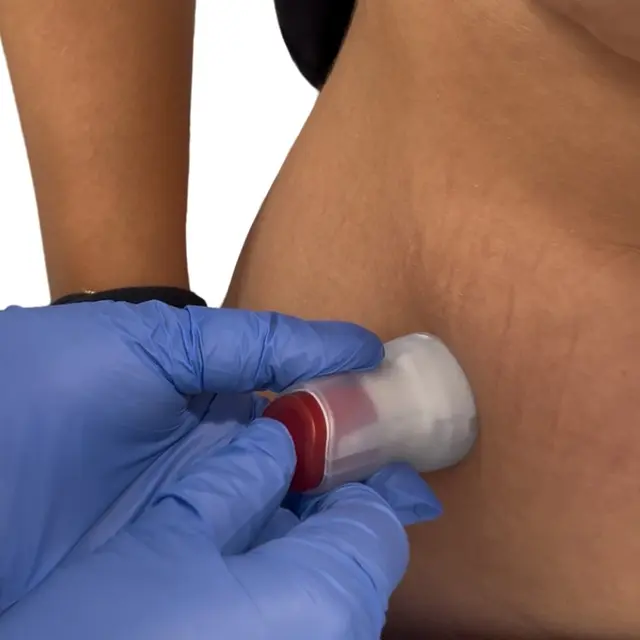
What this service is
Needle-Free IVF.
Needle-Free IVF uses a small subcutaneous catheter system — similar in concept to continuous glucose monitors — to deliver hormonal medications during your stimulation cycle. Instead of daily self-injections, the catheter is placed once and remains in position for 9 to 12 days, covering the full stimulation period. You administer medications through the catheter port rather than with repeated needle sticks.
This isn't a different IVF protocol — it's the same medications, same monitoring schedule, same egg retrieval procedure, and same expected outcomes. The only change is the delivery method. Clinical evidence and early patient feedback show comparable results in egg yield, embryo development, and pregnancy rates. Contact us for current pricing and to learn whether needle-free delivery is right for your protocol.
The catheter is placed by our clinical team at your first appointment, and we provide video guides and support for at-home medication administration. One important note: this device works with subcutaneous medications only — intramuscular medications like progesterone in oil (PIO) still require standard injection.
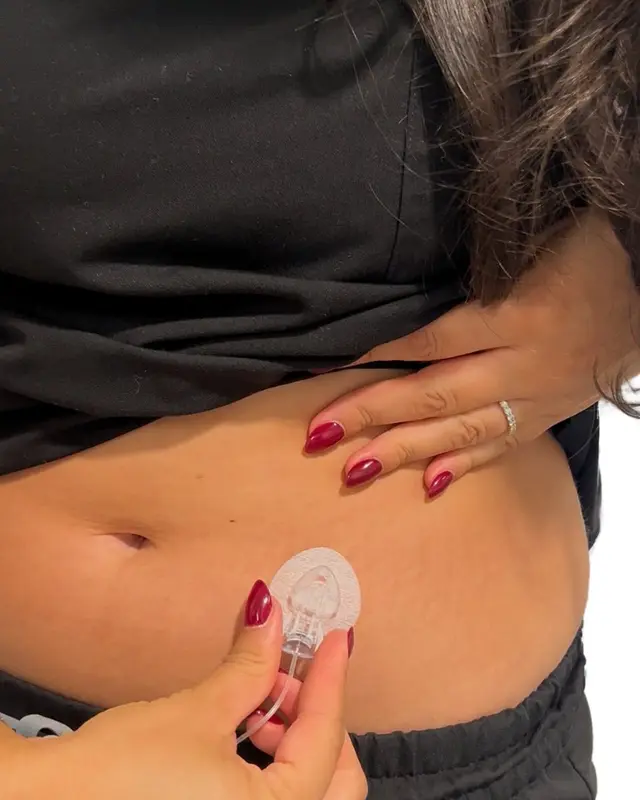
How the device works
One placement. Nine to twelve days. No daily needles.
The catheter is a thin, flexible tube placed just under the skin — similar to the devices used in continuous glucose monitoring. Our clinical team places it during your first stimulation appointment. It takes seconds, and patients consistently report that insertion is significantly less painful than a standard subcutaneous injection.
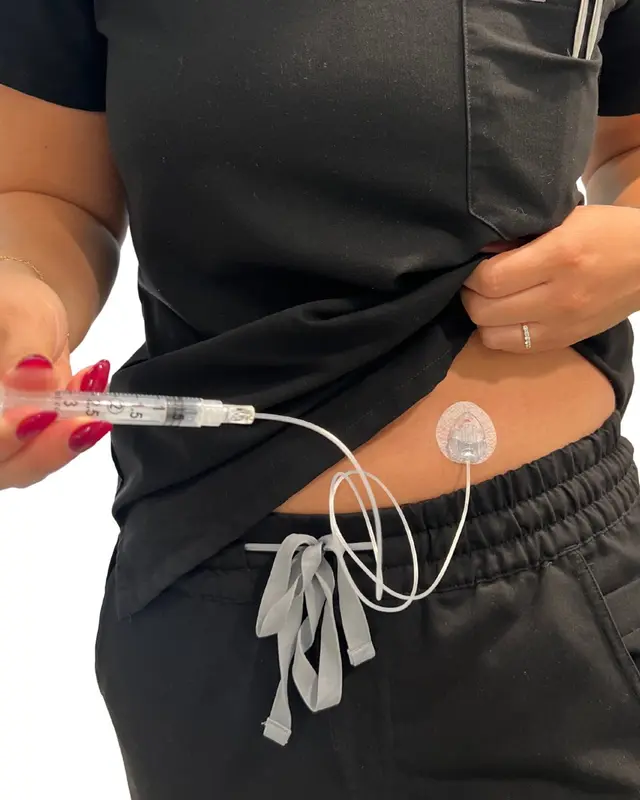
Once placed, the catheter stays in position for the full 9- to 12-day stimulation period. You administer medications at home by connecting a syringe to the catheter port — no needle touches your skin. After stimulation is complete, the catheter is removed and your cycle continues normally with egg retrieval. The only limitation: medications that require intramuscular delivery (like progesterone in oil) cannot use this device and are administered via standard injection.
What's in the needle-free cycle
Same IVF. Different delivery.
The needle-free option adds a catheter system to your standard IVF stimulation cycle. Cost is covered for Arbor patients; $200 for non-patients (includes the IVF needle kit — two catheter ports, tubing, alcohol pads, saline flushes, and syringes — plus a 15-minute consult with our fertility nurse).

Catheter Placement
A thin subcutaneous catheter is placed by our clinical team at your first stimulation visit. The placement takes seconds and is less painful than a standard injection. The catheter remains for 9–12 days.

At-Home Medication Delivery
Administer your stimulation medications at home by connecting a syringe to the catheter port. No needle touches your skin. We provide video guides and a saline flush for each administration.

Standard Monitoring
Your monitoring schedule is identical to standard IVF — regular monitoring ultrasounds, plus bloodwork drawn at a Quest or Labcorp near you, to track follicle development. The catheter doesn't change the clinical protocol.

Egg Retrieval & Beyond
Once stimulation is complete, the catheter is removed and the cycle continues normally — egg retrieval under anesthesia, ICSI fertilization, embryo culture, and storage. Same IVF from this point forward.
Not included: Medications for ovarian stimulation (typically $3,000–$4,500 — delivered through the catheter), intramuscular medications (like progesterone in oil, which require standard injection), diagnostic testing and infectious disease screening, embryo biopsy and PGT-A genetic testing, frozen embryo transfer ($3,000 separate FET cycle), and lab fees.
Your at-home routine
Five steps, once a day. That's the whole routine.
Self-administration at home
After your clinical team places the catheter, you handle daily medication administration on your own. Connect the syringe to the port, deliver your dose, and disconnect — no needles required.

Preparation
Wash your hands thoroughly, select an insertion site (we recommend the lower abdomen), clean it with an alcohol wipe, and let it dry completely.

Catheter placement & set up
Gently remove the paper backing from the adhesive tape without touching the adhesive. Remove the safeguard cap by squeezing the sides and pulling straight out.

Application
Position the insertion device on clean, dry skin and press the red activation button all the way down. The soft cannula inserts and the needle retracts automatically. Press the adhesive tape to secure.

Connecting the tubing
Prime the tubing with saline so no air is present, connect it to the infusion site, attach your pre-filled medication syringe, and administer. Flush with 0.5 mL of saline before disconnecting.

Clean up
Tubing doesn't stay in place between doses — disconnect it, cap both ends, and store it somewhere clean. The same tubing is reused for each scheduled administration.
Download the printable guide (PDF)
Our staff applies the device for your first use, and video tutorials walk you through every administration.
Patient stories
What needle-free patients tell us.
Common questions about Needle-Free IVF.
Does the catheter hurt to place?
Insertion is quick — just a few seconds — and patients consistently report it's significantly less painful than a typical subcutaneous injection. The catheter sits just under the skin, similar to a continuous glucose monitor sensor. Most patients describe a brief pinch during placement and then forget it's there.
Who is a good candidate for Needle-Free IVF?
Needle-Free IVF may be right for you if you experience needle anxiety, have difficulty with self-injection, bruise easily from repeated injections, or simply prefer a less invasive stimulation experience. It's also a good fit for patients who want the same clinical outcomes with reduced daily stress. During your consultation, Dr. Zarek will confirm that your medication protocol is compatible with the catheter system.
Is Needle-Free IVF as effective as traditional IVF?
Yes. Clinical evidence and early patient data show comparable results in egg yield, embryo development, fertilization rates, and pregnancy outcomes. The medications are the same — only the delivery method changes. The catheter delivers subcutaneous medications just as effectively as individual injections, and the monitoring protocol is identical.
What medications can be delivered through the catheter?
All medications prescribed for subcutaneous administration can be delivered through the catheter system. This covers the primary stimulation medications used during an IVF cycle. However, intramuscular medications — most notably progesterone in oil (PIO), which is commonly prescribed after egg retrieval — cannot be delivered through this device and require standard injection. Your clinical team will review your full medication protocol to set expectations.
What are the activity restrictions with the catheter?
You can continue all normal daily activities with the catheter in place. The only precautions involve activities that could weaken the adhesive dressing — swimming, saunas, steam rooms, hot yoga, and heavy sweating. Regular exercise, work, and daily routines are unaffected. If the dressing loosens, our team can advise on replacement.
How is medication administered at home?
Once the catheter is placed, you administer medications by connecting a luer-lock syringe to the catheter port and slowly pushing the medication through. No needle is involved — the syringe connects to the external tubing, not to your skin. After each administration, you flush the line with a provided saline syringe. We supply video tutorials and our clinical team is available for questions throughout your stimulation cycle.
Often considered alongside
Related services worth a look.
Curious about a gentler approach?
If needle anxiety has been holding you back from IVF — or if you've been through a cycle and want a less stressful stimulation experience next time — Needle-Free IVF might be the right fit. Start with a consultation. The initial 30-minute consult is $100 virtual or $200 in person.