
Care for Every Family
Fertility Options for Every Family
Couples trying to conceive, single parents by choice, LGBTQ+ families, and anyone preserving fertility before medical treatment or transition — one standard of care, built around the family you are creating.
One standard of care, whatever your family looks like
Care at Arbor starts the same way for everyone: a comprehensive fertility assessment — detailed medical history, physical examination, and advanced diagnostic testing, available in person or online. Where a partner is involved, we assess both of you, because the underlying factor is as often on one side as the other.
From there we map the lowest-intervention treatment that has a realistic chance of working for your situation, and we explain the trade-offs so the decision is yours. Every Arbor service has a flat self-pay price published in advance — no surprise add-ons, and no quote that needs a finance call to decode.
Explore Your Options




LGBTQ+ family building
Lesbian couples
Which partner provides the eggs? Which partner carries the pregnancy? Should both partners be biologically involved? The clinical paths are IUI with donor sperm, IVF with donor sperm, and reciprocal IVF — where one partner provides the eggs and the other carries the pregnancy, so both are physically part of it. Deciding who does what is shaped by health, age, ovarian reserve, and your own preferences; Dr. Zarek walks you through the clinical factors so you can make the call together. Arbor does not provide donor sperm in-house — we guide you through accredited sperm banks and coordinate the medical side once you have chosen.
Gay couples
The path to fatherhood usually involves three pieces: sperm from one or both partners, donor eggs, and a gestational surrogate who carries the pregnancy. We start with a fertility assessment and coordinate with the egg-donor and surrogacy agencies you choose; Arbor doesn’t provide gestational surrogacy itself. Each child can be biologically related to only one father. Some couples have siblings biologically connected to different partners; others use one partner’s sperm. There is no medically “right” answer, and we will walk you through the trade-offs.
Transgender and gender-affirming care
This is rarely a single conversation. It is a sequence of decisions that may stretch across years — preserving eggs or sperm before starting hormone therapy or gender-affirming surgery, returning to use those gametes afterward, and deciding whether to carry a pregnancy yourself or work with a gestational surrogate. Care begins with an assessment that accounts for your medical history, transition status, and fertility goals rather than a template, and it moves at your pace, not ours.
Read our guide to LGBTQ+ family building in Missouri and your legal options →



Single parents by choice
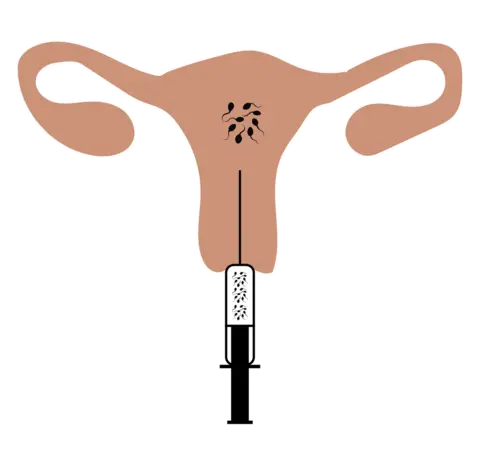
Building a family on your own terms starts with the same comprehensive assessment everyone gets. For single individuals with female anatomy, the common paths are IUI with donor sperm or IVF with donor sperm and ICSI, with egg freezing available if you want to protect your options and start later. The right approach depends on your age, what the assessment shows, and your own timeline.
For single individuals with male anatomy, parenthood typically runs through IVF with a gestational carrier, using donor eggs or a known egg provider; sperm preservation is available if you want to bank now and decide later. We work with pre-vetted donor banks, explain the difference between anonymous and known donors, coordinate with surrogacy agencies (Arbor doesn’t provide gestational surrogacy itself), and partner with experienced reproductive attorneys for the legal framework.
Couples trying to conceive
It often starts with one shared question — why is this taking longer than we expected? We begin by answering it, with a thorough fertility assessment of both partners, because in roughly a third of cases the underlying factor is on the male side, a third is on the female side, and a third involves both or remains unexplained.
Once we understand what is going on, we map the lowest-intervention treatment with a realistic chance of working. For many couples that means starting with a few cycles of medicated IUI before considering IVF. For others — particularly when male-factor infertility is significant or age is a factor — going directly to IVF with ICSI saves time and money. Dr. Zarek will walk you through both paths and help you decide.
A Team Built Around You
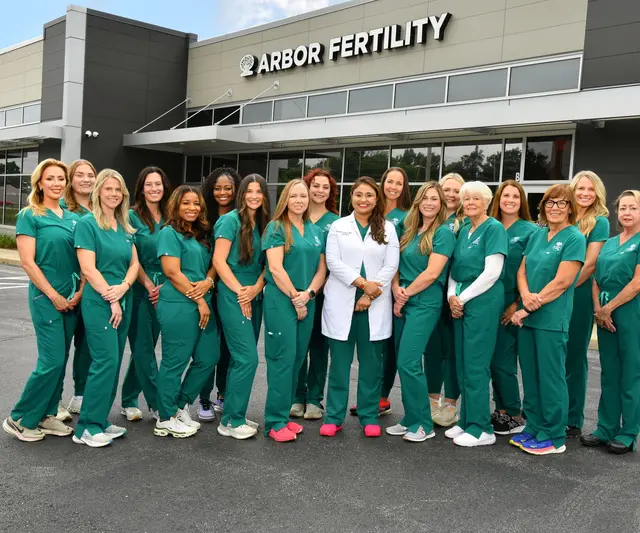
Arbor brings fellowship-trained reproductive endocrinology, embryology, and nursing together under one roof, combining clinical excellence with genuine warmth. We believe every patient deserves a care team that listens first and treats second.
From your first consultation through pregnancy, you’ll work with the same physician and the same nurses — not a rotating roster. That continuity is how we build the trust your journey requires.
Questions families ask us
What happens at a first consultation?
We begin with a comprehensive fertility assessment — a detailed medical history review, physical examination, and advanced diagnostic testing, available in person or online. Where a partner is involved, we assess both of you. From there we walk through every option that fits your situation.
How long does a typical treatment cycle take?
An IUI cycle aligns with your natural menstrual cycle and typically takes a few weeks. A full IVF cycle — stimulation, retrieval, fertilization, and transfer — runs about six to eight weeks from start to embryo transfer.
How does reciprocal IVF work for lesbian couples?
Eggs from one partner are retrieved and fertilized with donor sperm in the lab. The resulting embryos are then transferred to the other partner’s uterus, so both partners are physically part of the pregnancy.
How does IVF with donor eggs and surrogacy work for gay couples?
You select an egg donor and a gestational surrogate. The donor’s eggs are retrieved and fertilized with sperm from one or both partners through IVF. The resulting embryos are then transferred to the surrogate, who carries the pregnancy. Arbor doesn’t provide gestational surrogacy itself; we coordinate with the surrogacy agencies and partner clinics that do.
Can transgender individuals preserve their fertility before transitioning?
Yes. Cryopreservation involves freezing eggs or sperm before starting hormone therapy or undergoing gender-affirming surgery, preserving your ability to have biological children in the future.
What fertility treatments are available for single individuals with female anatomy?
Single individuals with female anatomy have several options including IUI with donor sperm, IVF with donor sperm and ICSI, and egg freezing for future use. The best approach depends on your age, fertility assessment results, and personal timeline. We walk through every option during your initial consult.
Can single men become fathers through surrogacy?
Absolutely. Gestational surrogacy allows single men to become biological fathers. The process involves selecting an egg donor, creating embryos through IVF, and transferring an embryo to a gestational carrier. Arbor doesn’t provide gestational surrogacy itself; we coordinate with the surrogacy agencies and reproductive attorneys who handle it. Missouri law is supportive of surrogacy arrangements.
Can both parents be legally recognized as the child’s parents?
Yes, but the exact process varies by state and local law. We strongly recommend consulting a family-law attorney experienced in LGBTQ+ family building to confirm your specific path to legal parentage.
Testimonials
Stories from Our Families
Dr. Zarek and her team are nothing short of incredible. After being at a fertility clinic at the public hospital for 3 and a half years, we transferred to Arbor hoping to get better results, a deeper connection to our care team, and ultimately to feel comfortable and supported during such a difficult/stressful/important time in our lives. We were tired of feeling like we were on a conveyer belt, getting the same treatment options as other patients without room for conversations or changing things to better suit our situation. We found all of that and then some with Arbor. Dr. Zarek is such a down to earth person who genuinely cares about the patient and their family. We are so grateful for Arbor and all that they have done to make our dreams of having a family a reality. Without them I’m not sure where we would be. If you are considering switching from your current clinic or are just starting your fertility journey, Arbor is the perfect choice!
The first time we met Dr. Zarek we instantly knew how deeply she cares about her patients. She guided us through our journey with her caring personality, which led us to be able to remain calm and trust the process. We are so grateful for all of her guidance and support in order for our family to be blessed to get our miracle baby! We would like to say Thank you Dr. Zarek and all of our Arbor Family!
The main reason we chose Arbor Fertility was because of the immaculate care from Dr. Zarek! I had never spoke with a doctor so in tune with my emotions and goals… She was so compassionate, making sure my husband and I both felt comfortable.
Whether it was answering endless questions, working around crazy schedules, or just helping us navigate everything that comes with IVF, Dr. Zarek was with us every step of the way. We cannot imagine our life without Andi and Paxton, and owe that to Dr. Zarek!
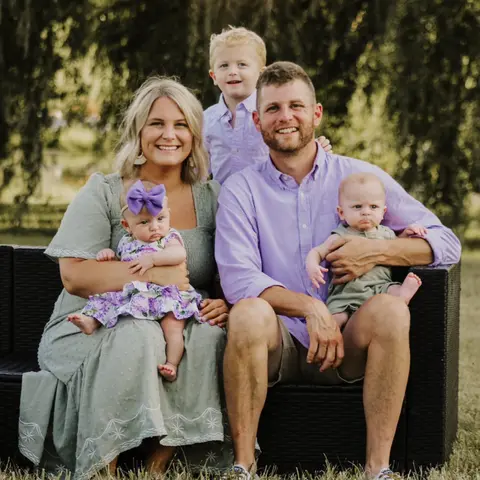
I will forever be thankful to Dr. Zarek and her team for making our dream come true.
We love Dr. Zarek and the whole team at Arbor Fertility! Let’s be honest, infertility is basically one of the worst, most heavy experiences that someone can walk through. Yet everyone keeps everything so light at appointments that I forget the suck of the situation for a bit, which I appreciate. But it is still obvious that they are all just as invested in the wins and losses as we are. You won’t be just a number or a patient here.
We have waited for so long to have our home be filled with the sounds of a baby, and with Dr. Zarek and the Arbor team’s help, we’re enjoying the sounds of two babies! We are so thankful for their role in our journey and praise God we get to be our girls’ parents!
Everything was seamless. We knew what we were getting into, everything about the clinic was very transparent. We never had any unexpected surprises, whether thats additional cost, procdures, anything. They did what they said. They feel like family to us. They took great care of us. Created a beautiful baby girl we are so happy to have and for us we thought it was something we wouldn’t have and here we are!
Dr. Zarek changed our lives in so many ways. Not only did she help us achieve a life long dream of becoming parents, but she restored my faith in medical providers through her kind and caring personality. No matter what happened, she worked tirelessly to help us get our miracle baby and was with us every step of the way.
From day 1, Dr. Zarek and Arbor Fertility treated our family with care and compassion. At no point did we feel like a number. During the initial consultation, all of our treatment options were clearly communicated and we were able to transparently talk about what was best for our family. The entire time, Dr. Zarek made herself available and responded to our questions outside of regular business hours. She never made us feel like we were bothering her with “silly questions”. The entire experience was extremely personable and the clinic provided a warm and positive environment. Their mission is to provide concierge service without the steep price tag and they delivered on all fronts. Our family is now complete, thanks to Dr. Zarek and her team!!
From our first consultation to our successful IUI, we felt Dr. Zarek was in this fertility journey with us. She was direct, compassionate, positive, honest, kind, and caring. She was exactly what we were looking for in a fertility doctor.
Dr. Zarek has been the best doctor I have had the pleasure to work with. She made me feel important and truly cared about me and my well-being. I cannot say enough great things about her or her staff. Everyone was always so nice to me and greeted me like a friend. I would recommend her to anyone struggling with infertility.
Dr. Zarek is hands down the most amazing doctor I’ve ever had! She always explained everything and sat down to make sure my husband and I’s questions were answered before she left the room.
From our very first appointment, we have always been confident that we were exactly where we needed to be. Dr. Zarek is knowledgeable and accomplished, of course; but it is her compassion, sincerity, calm confidence, and wit that have always gotten us through the peaks and valleys that inevitably come in this journey.
Dr. Zarek made me feel like I am her only patient; she was attentive and kind, and I could reach out to her anytime with questions or concerns.
The staff at the clinic is very friendly and helpful. They recognize you when you walk in the door and they treat you like family. Everyone is so supportive and kind.
I couldn’t be more pleased with our experience with Dr. Zarek and her staff. A journey through fertility can be scary, overwhelming, and uncomfortable, but she made the whole process easy to understand and as comfortable as possible.
These people work tirelessly for you, often coming in on weekends to make sure you are getting the care you need when you need it! I also loved how they knew my name and personally greeted me every time!
The most incredible doctor and staff I’ve ever worked with, hands down. Everyone is kind, patient, punctual, and genuinely cares about you as a patient. I can’t recommend Dr. Zarek and her staff highly enough!
I would tell people that Dr. Zarek is going to be the best communicator of any doctor I’ve ever met with. In terms of availability, you have her cell phone number and she’s very responsive. I’ve never felt so comfortable messaging a doctor, but she is very down to earth and genuine.
Every Journey Starts with a Conversation
Whether you're just starting to explore your options or you're ready to begin treatment, our team is here to listen and guide you through every step.