Frozen Embryo Transfer
One embryo. One transfer. On your timeline.
Embryo thaw, lining preparation, the transfer itself, and post-transfer monitoring — $3,000. No retrieval. No anesthesia. Just the hopeful second half of the IVF journey.
What this service is
Frozen Embryo Transfer (FET).
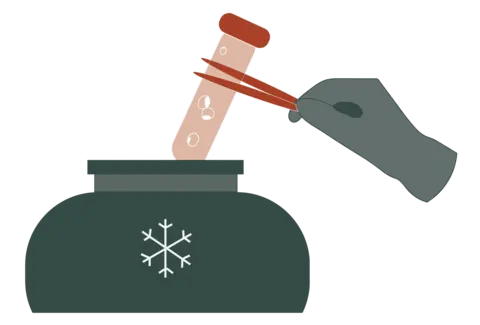
A frozen embryo transfer is the second half of the IVF process — the moment when an embryo that was created and frozen during a previous cycle is thawed and placed into the uterus. For many patients, this is the step that brings the entire journey full circle.
Our $3,000 FET package covers the uterine lining preparation, embryo thaw, the transfer procedure itself, and post-transfer monitoring including your pregnancy test. There is no egg retrieval, no anesthesia, and no embryology lab work — all of that happened in a prior cycle. This makes FET significantly less invasive and less expensive than a full IVF cycle.
At Arbor, every FET cycle follows the same careful sequence: Dr. Zarek monitors your lining over two to four weeks of hormone support, the embryology team thaws your embryo on transfer day, and the transfer is performed in a brief office visit using a thin catheter guided by ultrasound. A pregnancy test follows approximately two weeks later.
Why split the cycle
Your body recovers. Your embryo waits. Then you’re ready.
Splitting retrieval and transfer into separate cycles isn’t just a cost-saving measure — it’s often better medicine. After egg retrieval and the hormone stimulation that precedes it, your body needs time to reset. A FET cycle lets your uterine lining develop naturally or with gentle support, creating an environment that’s optimized for implantation rather than still recovering from retrieval.
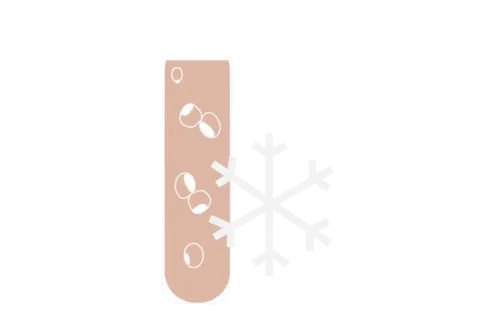
There’s another advantage: time. Freezing embryos gives you the option to do PGT-A genetic screening before transfer, so you know which embryo has the best chance. It also means you can transfer on your timeline — weeks, months, or even years after retrieval — without affecting embryo quality. Vitrified embryos don’t degrade in storage.
Inside the $3,000 fee
Four steps. One price. The hopeful half.
The FET package covers everything from lining preparation through your pregnancy test. No retrieval, no lab fees, no anesthesia.

Lining Preparation
Your uterine lining is prepared over two to four weeks using hormone support. Monitoring ensures the lining reaches the ideal thickness and pattern for implantation before scheduling the transfer.

Embryo Thaw
On the morning of your transfer, the embryology team thaws your vitrified embryo. Vitrification preserves quality at the cellular level — thawed embryos perform comparably to fresh ones.

Embryo Transfer
Dr. Zarek places the embryo into your uterus using a thin, flexible catheter guided by ultrasound. The procedure takes minutes, requires no anesthesia, and you go home the same day.

Post-Transfer Monitoring
Hormonal support continues after the transfer to support early implantation. A pregnancy blood test is scheduled approximately two weeks later — the moment you’ve been working toward.
Not included: Medications for lining preparation (typically $300–$800, and more if refills are needed), diagnostic testing and infectious disease screening, embryo storage fees ($600/year after year one), PGT-A genetic testing (if not already completed), a saline infusion sonogram (SIS) if you need one ($250), and laboratory fees (billed to insurance or ~$400–$800 self-pay).
Common questions about frozen embryo transfer.
How is a frozen embryo transfer different from a fresh transfer?
In a fresh transfer, the embryo is placed into the uterus during the same cycle as the egg retrieval — before your body has fully recovered from stimulation. In a frozen transfer, the embryo is vitrified and stored, then transferred in a separate cycle weeks or months later. FET allows your uterine lining to develop without the hormonal residue of retrieval, which is why many clinics now favor FET, and why Arbor transfers frozen embryos only. Success rates are comparable to or higher than fresh transfers.
How long does a FET cycle take from start to finish?
A typical FET cycle takes three to six weeks. You’ll start with hormone support to prepare your uterine lining, come in for monitoring visits to confirm lining thickness, and then have the transfer itself. The timeline is flexible — if your lining isn’t ready, we simply extend the preparation rather than force a transfer window. A pregnancy blood test follows about two weeks after transfer.
What does the $3,000 fee cover?
The package includes lining preparation monitoring, embryo thaw, the transfer procedure, and your post-transfer pregnancy test. Medications for lining preparation (typically $300–$800, and more if refills are needed), diagnostic testing, embryo storage fees, lab work, and a saline infusion sonogram (SIS, $250) if you need one are billed separately. FET is significantly less expensive than a full IVF cycle because it doesn’t involve egg retrieval, anesthesia, or embryology lab work.
Can I use insurance for FET?
If your plan includes fertility benefits, we’ll verify your coverage and bill directly. The $3,000 published fee is your ceiling — you pay only what your plan leaves. Even without fertility-specific coverage, monitoring bloodwork is routinely billed to insurance, which offsets some of the out-of-pocket cost.
What if the transfer doesn’t work?
Not every transfer results in pregnancy — success depends on embryo quality, lining condition, and other factors. If the first transfer doesn’t succeed and you have additional frozen embryos, a subsequent FET cycle uses the same $3,000 fee. There is no escalating price or "second attempt" premium. Dr. Zarek will review your cycle in detail and adjust the protocol before any next attempt.
Does transferring multiple embryos increase my chance of twins?
Yes — transferring more than one embryo increases the likelihood of a multiple pregnancy. At Arbor, we follow ASRM guidelines and strongly recommend single embryo transfer (SET) for most patients, particularly those with PGT-A-tested embryos. SET gives you the best chance of a healthy singleton pregnancy while avoiding the medical risks associated with twins and higher-order multiples. Dr. Zarek will discuss the recommendation for your specific situation.
Often considered alongside
Related services worth a look.
Ready to take the next step?
If you have frozen embryos waiting, the transfer is the moment everything comes together. Most patients start with a 30-minute consult — $100 virtual, $200 in person. We’ll review your embryo inventory, discuss your timeline, and walk through exactly what a FET cycle looks like at Arbor.