Egg Freezing
$5,000 to preserve your options. Use them when you’re ready.
Egg retrieval, up to three monitoring ultrasounds, vitrification, anesthesia, and your first year of storage — one published fee. Medications typically $3,000–$4,500. Three-cycle bundle available at $12,000.
What this service is
Egg Freezing (Oocyte Cryopreservation).
Egg freezing combines IVF technology with long-term preservation, giving you the option to harvest and store eggs now and use them years later — when the timing is right. The process uses vitrification, a rapid flash-freezing technique that prevents ice crystal formation and preserves egg quality at the cellular level.
Our $5,000 egg freezing package covers the retrieval procedure, up to three monitoring ultrasounds, anesthesia, the vitrification process, and your first year of cryogenic storage. Medications, diagnostic testing, and lab work are billed separately so you always know what each line item costs.
Every egg freezing cycle at Arbor follows a proven sequence: ovarian stimulation over 10–14 days, follicle monitoring to track development, egg retrieval under light anesthesia by Dr. Zarek, and immediate vitrification in the embryology lab. A virtual follow-up visit reviews your results and discusses next steps.
Why freeze now
Your eggs don’t wait for your plans to catch up.
Egg quality declines with age — that’s biology, not opinion. A woman’s peak reproductive years are her late twenties and early thirties. By the mid-thirties, the rate of decline accelerates. Freezing eggs during your window of highest quality gives you the best chance of a successful pregnancy later, whether that’s two years from now or ten.
This isn’t about pressure. It’s about having a real option when you’re ready — not a diminished one. Patients freeze eggs for all kinds of reasons: career focus, relationship timing, medical treatments that may affect fertility, or simply wanting more runway. At $5,000 per cycle, the investment is a fraction of what most patients expect.
Inside the $5,000 fee
Five components. One price. Nothing hidden.
The egg freezing package covers everything from monitoring through cryopreservation. No add-ons, no surprise line items during the cycle.

Egg Retrieval
Eggs are collected from the ovaries in a brief outpatient procedure. Dr. Zarek guides a thin needle using ultrasound imaging — the entire retrieval typically takes 15–20 minutes.

Up to three ultrasounds
Transvaginal ultrasounds track follicle development during the stimulation phase. Up to three monitoring visits are included to ensure the retrieval is timed for maximum egg yield.

Vitrification
Eggs are flash-frozen using vitrification — a rapid cooling technique that prevents damaging ice crystals. Vitrified eggs maintain quality comparable to the day they were retrieved.

Anesthesia
Light sedation keeps you comfortable throughout the retrieval. You’ll rest in recovery for about 30 minutes afterward and go home the same day — most patients return to normal activity within 24 hours.

Year-one storage
Your frozen eggs are stored at a secure cryogenic facility with continuous monitoring. The first year of storage is included in your package fee. Subsequent years are $600 per year.
Not included: Diagnostic testing and infectious disease screening, medications (typically $3,000–$4,500 depending on protocol), laboratory fees (billed to insurance or $400–$800 self-pay), and donor services. Storage after year one is $600 per year, billed directly by the storage facility.
Multi-Cycle Package
3-Cycle Egg Freezing Package
Not every patient gets the egg yield they need from a single cycle — and that’s completely normal. Younger patients may bank enough eggs in one retrieval, but others benefit from two or three cycles to build a larger reserve. Arbor’s three-cycle package lets you plan ahead and save.
$12,000
Complete 3-cycle package
Each cycle includes:
- Three complete egg freezing cycles within 12 months
- Up to three monitoring ultrasounds per cycle
- Egg retrieval procedure each cycle
- Anesthesia for each retrieval
- Vitrification and cryopreservation each cycle
- Virtual follow-up visit after each cycle
Not included: Diagnostic testing and infectious disease screening, medications (typically $3,000–$4,500 per cycle), laboratory fees (billed to insurance or $400–$800 self-pay), donor services, and storage after year one ($600/year). Full balance due upfront; non-refundable after cycle coordination begins. Payment plans available through third-party financing.
Common questions about egg freezing.
Who should consider egg freezing?
Egg freezing is an option for any woman who wants to preserve her fertility for the future. Common reasons include focusing on career or education, not yet being in the right relationship, facing medical treatments like chemotherapy that may affect fertility, or simply wanting more time before starting a family. Most patients who freeze eggs are in their late twenties to mid-thirties — the window when egg quality is still high but the timeline for family-building feels uncertain.
How long does an egg freezing cycle take from start to finish?
A single cycle typically takes two to three weeks. You’ll start with ovarian stimulation medications for 10–14 days, come in for two to three monitoring ultrasounds during that window, and then have the retrieval procedure. The entire process from first injection to retrieval is usually completed within 14 days. Recovery is quick — most patients are back to their routine within a day.
What does the $5,000 fee actually cover?
The package includes the egg retrieval procedure, up to three monitoring ultrasounds, anesthesia, vitrification (the flash-freezing process), and your first year of cryogenic storage. Medications (typically $3,000–$4,500), diagnostic testing, infectious disease screening, and lab fees are billed separately. We break out every cost before you start so there are no surprises.
How long can frozen eggs stay viable?
Vitrified eggs can remain frozen indefinitely without degradation. The technology prevents ice crystal formation, so the eggs maintain the same quality they had on the day of retrieval. Patients have successfully used eggs frozen for over a decade. Your eggs are stored at a secure, continuously monitored cryogenic facility and can be shipped to any clinic when you’re ready to use them.
Can I use insurance for egg freezing?
Some insurance plans now cover egg freezing, particularly plans that include fertility preservation benefits. If you have fertility coverage, we’ll verify your plan and bill directly — the $5,000 published fee is your ceiling, and you pay only what your plan leaves. Even without fertility-specific coverage, lab work is routinely billed to insurance, which offsets some of the out-of-pocket cost.
What happens when I’m ready to use my frozen eggs?
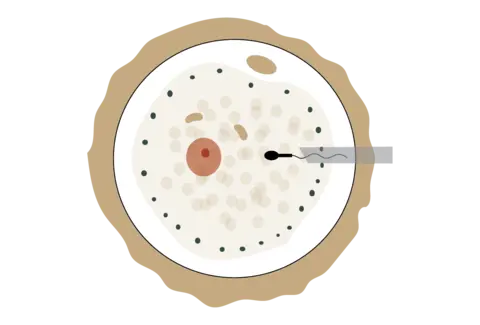
When you’re ready, your eggs are thawed, fertilized using ICSI (intracytoplasmic sperm injection), cultured in the embryology lab, and transferred as an embryo. This is essentially the second half of an IVF cycle. You can do this at Arbor or have your eggs shipped to another clinic. The thaw-to-transfer process is a separate fee — typically aligned with our frozen embryo transfer pricing at $3,000.
Often considered alongside
Related services worth a look.
Thinking about preserving your fertility?
Most patients start with a 30-minute consult — $100 virtual, $200 in person. We’ll review your history, discuss your timeline, and explain exactly what a freeze cycle looks like at Arbor — no pressure, no hard sell, just the information you need to decide.